Pectus Excavatum Treatment with the Wang Procedure
Pectus excavatum is a chest wall deformity in which the breastbone sinks inward. When planning treatment, the shape of the depression matters as much as its depth, as do the flexibility of the rib cage, the person’s complaints and any previous treatments. The Wang procedure is one of the surgical options that can be considered in this evaluation.
How the Wang procedure works
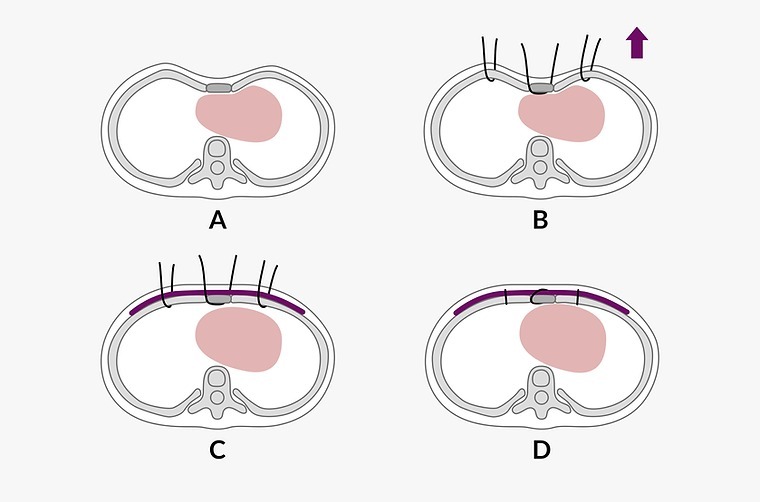
In the technique developed by Dr. Wenlin Wang and his team, a shaped metal bar is placed in front of the breastbone, within the chest wall layers beneath the skin. The sunken structure is lifted toward this bar and fixed in place. The bar stays inside the body; it is not a brace worn on the outside.
ICWS • Watch on YouTube
The difference between Wang and Nuss
In the Nuss operation, the bar passes behind the breastbone and supports the depression from the inside. In the Wang procedure, the sunken structure is lifted toward a bar located in front of the bone. This difference in placement matters when evaluating which approach is suitable.
It cannot be said that the Wang procedure is safer or more suitable for every patient. The applicability, expected benefit and risks of each method are evaluated according to the person’s chest wall structure.
Who can be considered
Age alone does not determine the choice of method. In children, the growth process and non-surgical options are considered; in adults, the stiffness of the chest wall, the extent of the depression and any asymmetry are evaluated together. In patients who have previously had chest or heart surgery, old operation reports and imaging help with planning.

Dr. Hasan Ersöz and the Guangzhou experience
In July 2026, I visited Dr. Wenlin Wang’s center in Guangzhou and learned the Wang procedure directly from him. I take this knowledge into account, together with my existing chest wall surgery experience, when deciding which method suits the patient.
Surgery and recovery
The scope of the operation, the bar to be used and the follow-up plan are explained during the consultation. Hospital stay, return to work or school, sports and the timing of bar removal are planned individually. Pain, infection, bleeding, bar-related problems, insufficient correction and the possibility of reoperation are discussed before surgery.
Frequently asked questions
Can the Wang procedure be performed in adults?
It can be considered in selected adult patients. The structure of the chest wall and whether the planned correction can be achieved with this method are important.
Are Wang and Wung the same operation?
They are different methods. Wung is a Nuss-based approach, and the bar is placed behind the breastbone. In the Wang procedure, the bar is located in front of the breastbone.
How is the cost of the Wang procedure determined?
The cost is determined after the evaluation, according to the scope of the operation, the need for a bar, hospital services and the follow-up plan. A personal offer explaining the recommended procedure and the services it covers is provided.
Apply for an evaluation
To discuss treatment options, you can contact Dr. Pectus Clinic in Izmir. For patients applying from other cities or from abroad, a preliminary consultation and the sharing of the necessary documents are organized. The exact treatment plan is determined after the examination and tests have been evaluated.