
Pectus Excavatum Treatment with the Wung Procedure
The Wung procedure is a Nuss-based surgical approach described by Dr. Wenlin Wang and his team for the treatment of pectus excavatum. It aims to correct the depression with bars placed behind the breastbone. Although its name resembles the Wang procedure, the two operations differ in bar placement.
How the Wung procedure works
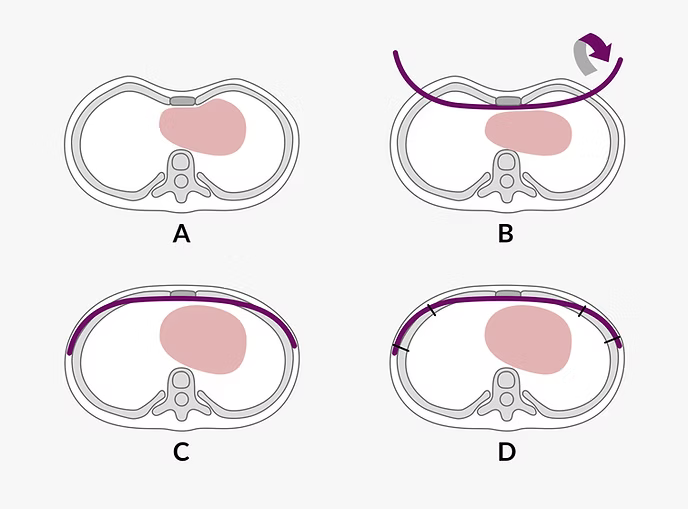
Shaped bars are placed behind the breastbone and positioned to support the depression. The placement of the bars and their fixation to the ribs are among the key details of the method. The number and position of the bars are planned according to the patient’s chest wall structure.
ICWS • Watch on YouTube
How it differs from the Nuss operation
The Wung procedure shares the same basic lifting principle as the Nuss operation. In the description by Dr. Wenlin Wang and his team, there are arrangements concerning how the bars are passed and fixed. Which approach is suitable depends less on the name of the operation than on the patient’s anatomy and the correction needed.
Adult patients and those who have had previous surgery
In adults, the stiffness of the chest wall and previous operations are especially important. In patients who apply after an earlier operation, the current depression is evaluated together with why the earlier procedure was not sufficient. Old operation reports, imaging showing the position of the bars and current tests help with this evaluation.

Dr. Hasan Ersöz and the Guangzhou experience
In July 2026, I visited Dr. Wenlin Wang’s center in Guangzhou and learned the Wung procedure directly from him. I take this knowledge into account, together with my existing chest wall surgery experience, when deciding which method suits the patient.
Follow-up after surgery
During follow-up, wound healing, the position of the bars and range of movement are evaluated. Pain control, breathing exercises and return to daily life are planned individually. The time for bar removal is determined at follow-up visits.
Because the work is carried out inside the chest cavity, risks such as bleeding, air collecting around the lung, infection, bar-related problems and injury to the heart or surrounding structures are discussed in the pre-operative consultation. Additional illnesses and previous operations are also taken into account.
Frequently asked questions
Is the Wung procedure performed outside the chest cavity?
The bar sits behind the breastbone, inside the chest cavity. In this respect it differs from the Wang procedure, in which the bar is placed in front of the breastbone.
Is the same number of bars used in every patient?
No. The number and placement of bars are planned according to the correction to be made. The recommended arrangement is explained using the examination and imaging.
How is the cost of the Wung operation determined?
The need for bars, the need for reoperation, additional procedures and hospital services affect the cost. After the evaluation, an offer with a clear scope is prepared.
Apply for an evaluation
To discuss treatment options, you can contact Dr. Pectus Clinic in Izmir. For patients applying from other cities or from abroad, a preliminary consultation and the sharing of the necessary documents are organized. The exact treatment plan is determined after the examination and tests have been evaluated.